🛡️ How to Spot and Outsmart Online Sales Scammers: A Cautionary Tale with a Twist

Online marketplaces and social media platforms have become vibrant hubs for artists, crafters, and small business owners to connect with buyers. But where creativity flourishes, scammers often lurk — hoping to exploit trust and vulnerability. Recently, I encountered one such scammer while selling my handmade art. Instead of falling for their tricks, I turned the tables with a dose of sarcasm and surreal humor. Here's what happened — and how you can protect yourself.
🎭 The Setup: A Seemingly Genuine Buyer
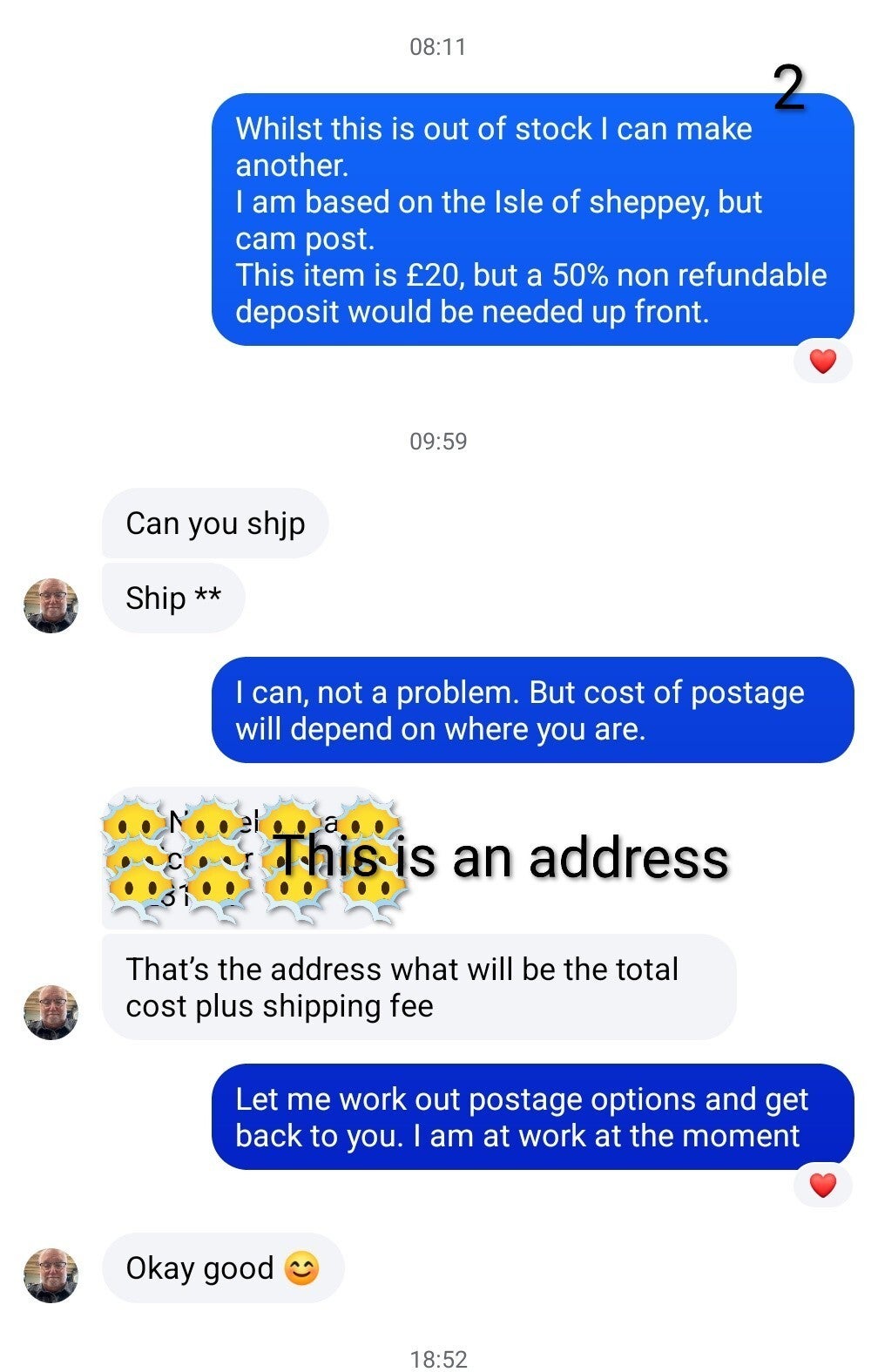
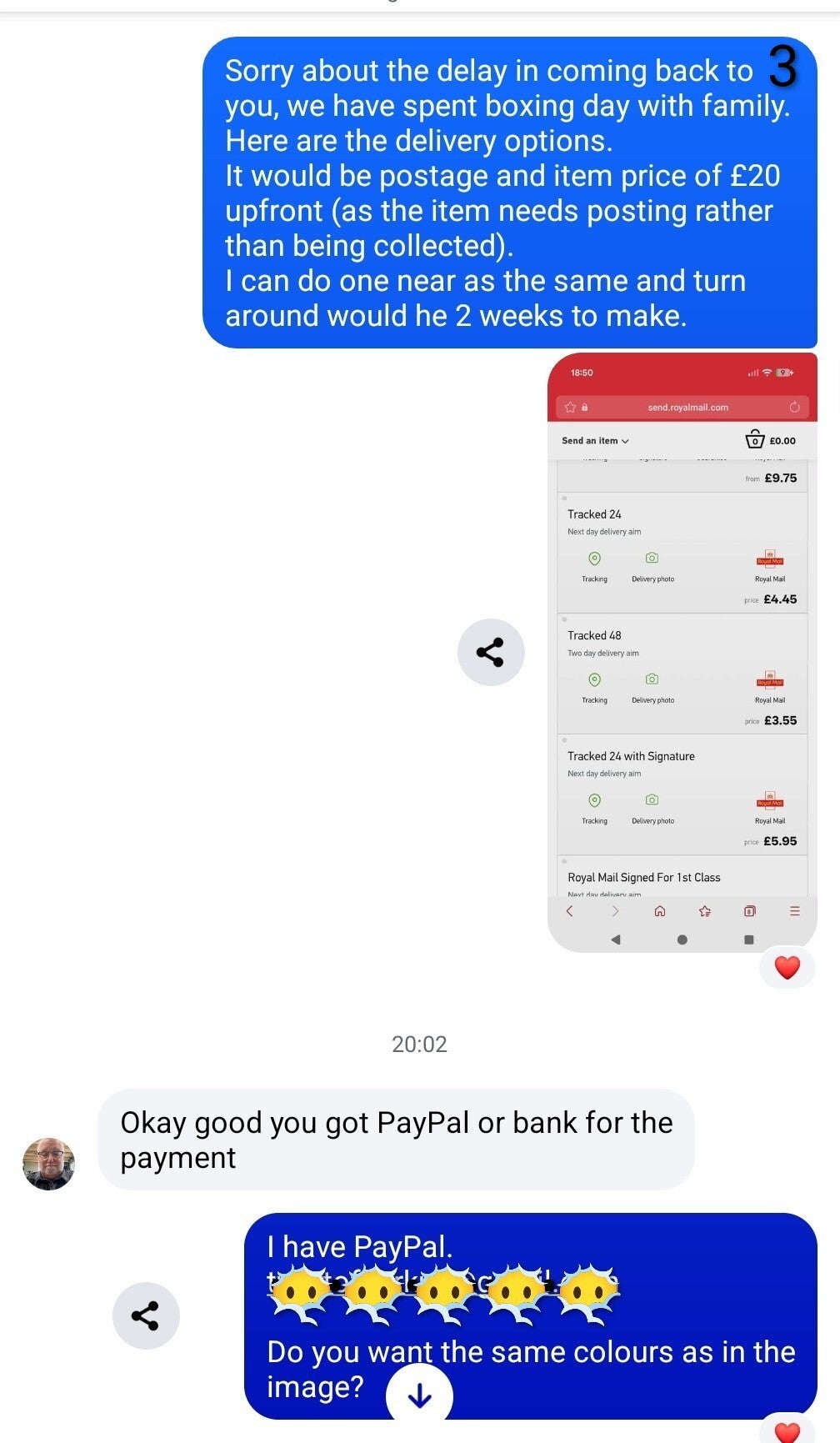
It started innocently enough. A person named "Jass" messaged me on Facebook Messenger, expressing interest in a resin mermaid tray I'd posted. They asked about the price, location, and whether I could make a similar piece. So far, so normal.
But things quickly took a turn.
🚩 Red Flags to Watch For
Here’s how the scam unfolded — and what you should look out for:
| 🚩 Red Flag | What It Means | What I Did |
|---|---|---|
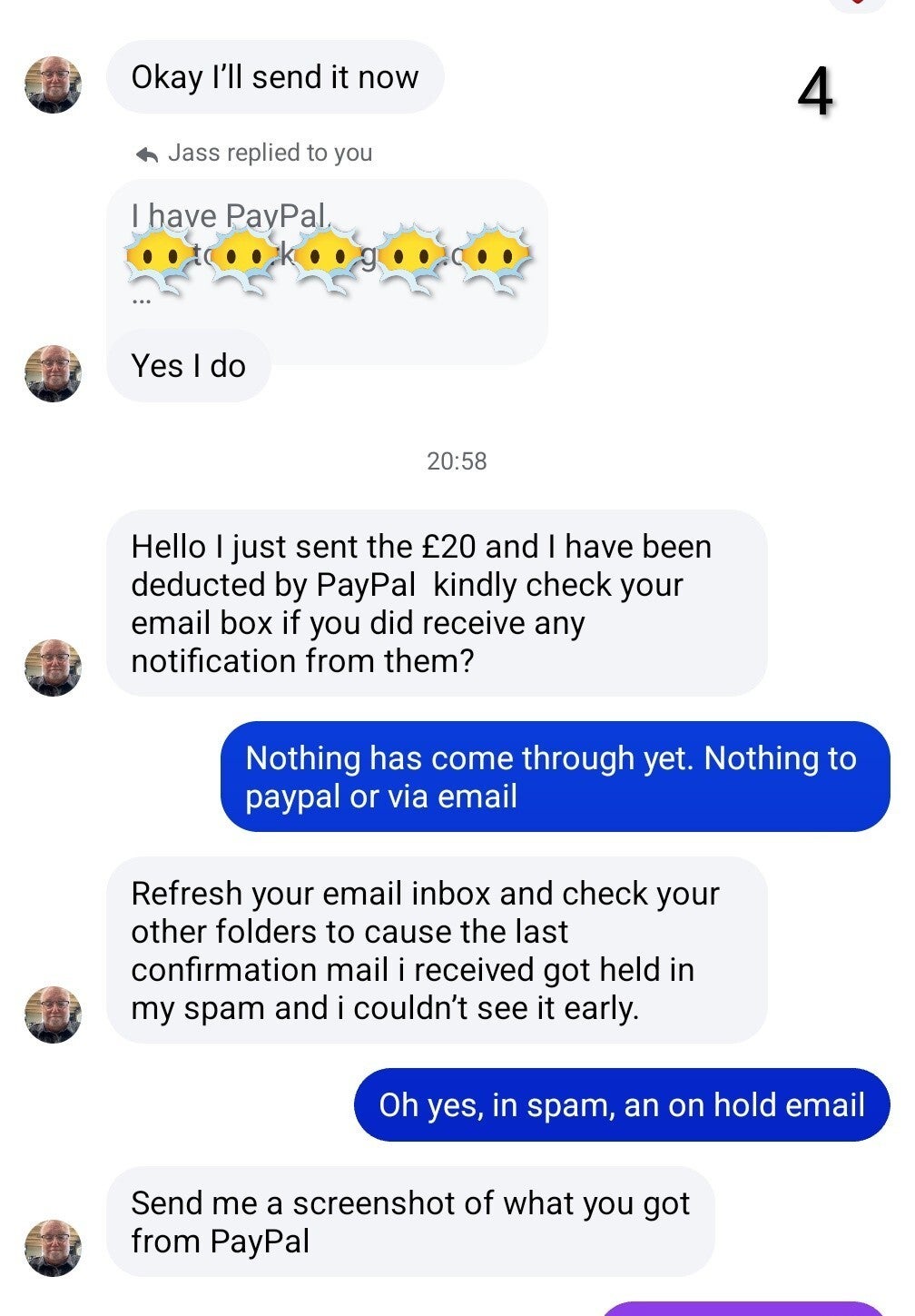
| Urgent interest followed by payment issues | Scammers often pretend to send money and then claim it's "on hold" or "pending" | I checked my PayPal — no payment received |
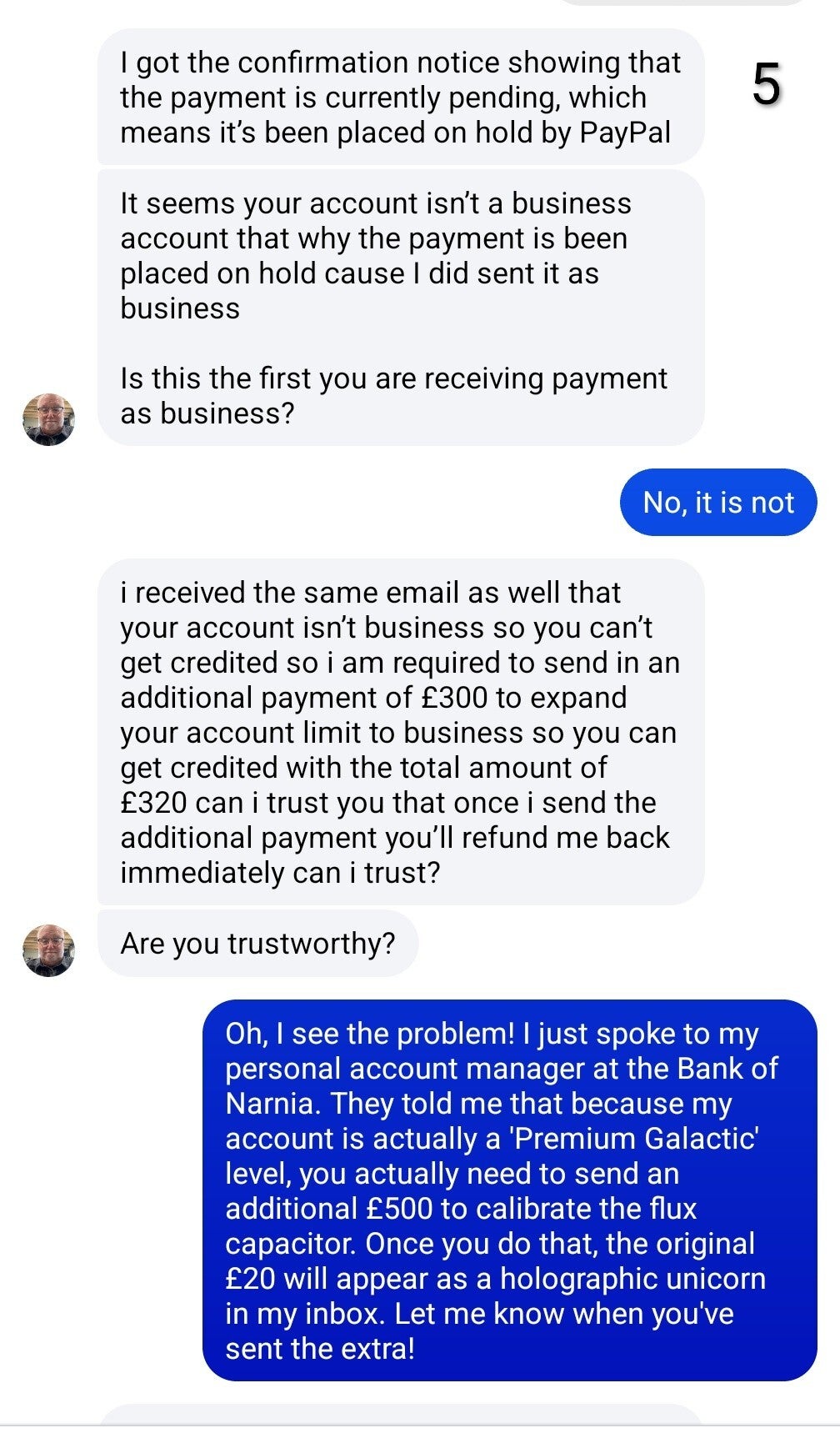
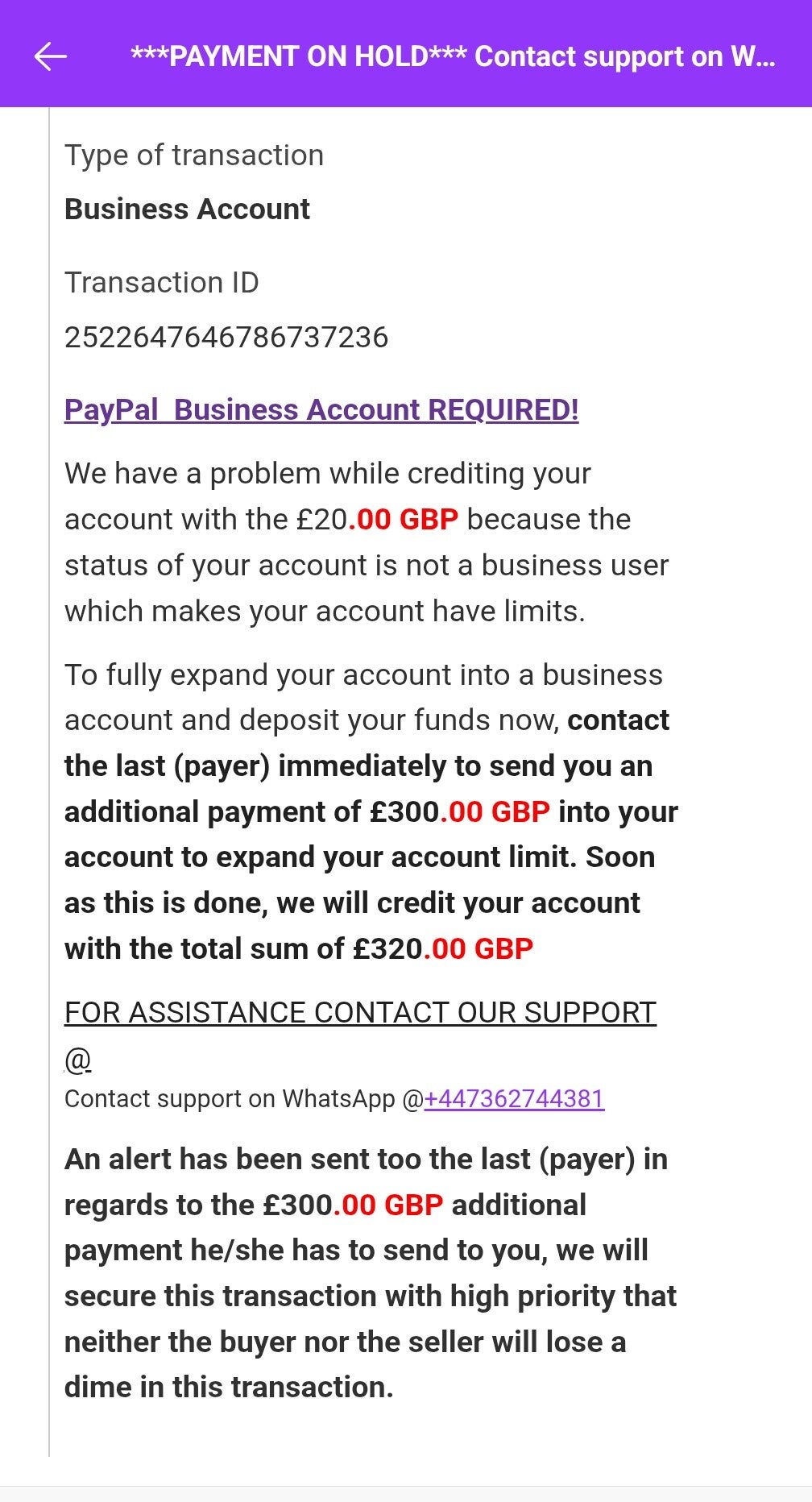
| Requests for additional payments to "unlock" funds | Classic scam tactic: they ask you to send money to receive money | They claimed I needed to upgrade to a business account with a £300 deposit |
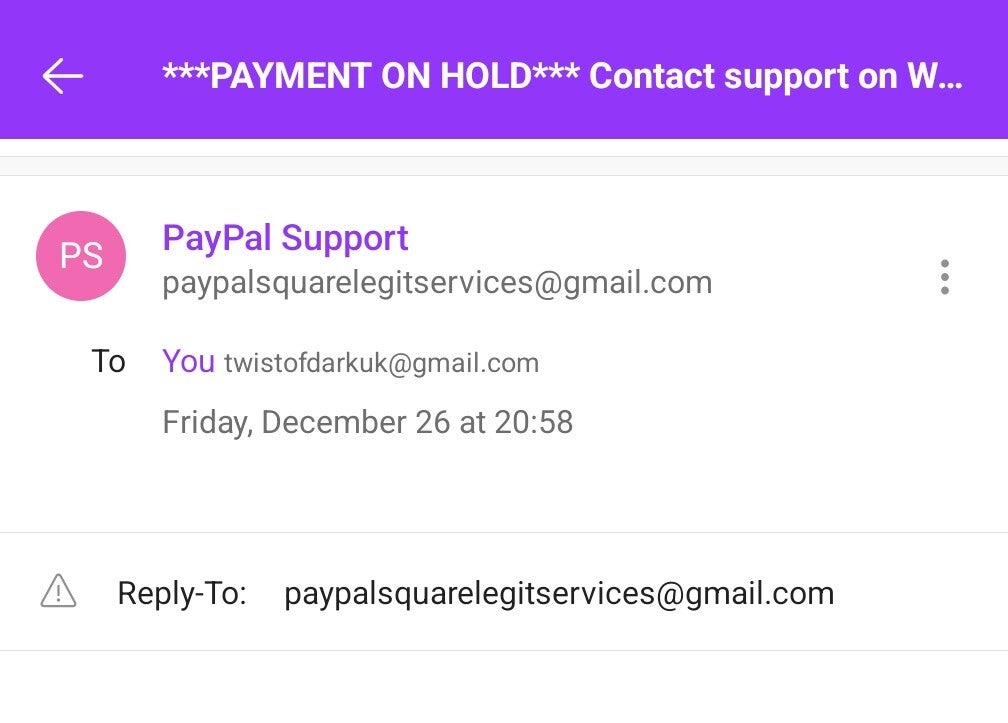
| Fake PayPal emails | These often land in your spam folder and look official but are not | I found a spoofed email with a suspicious "on hold" message |
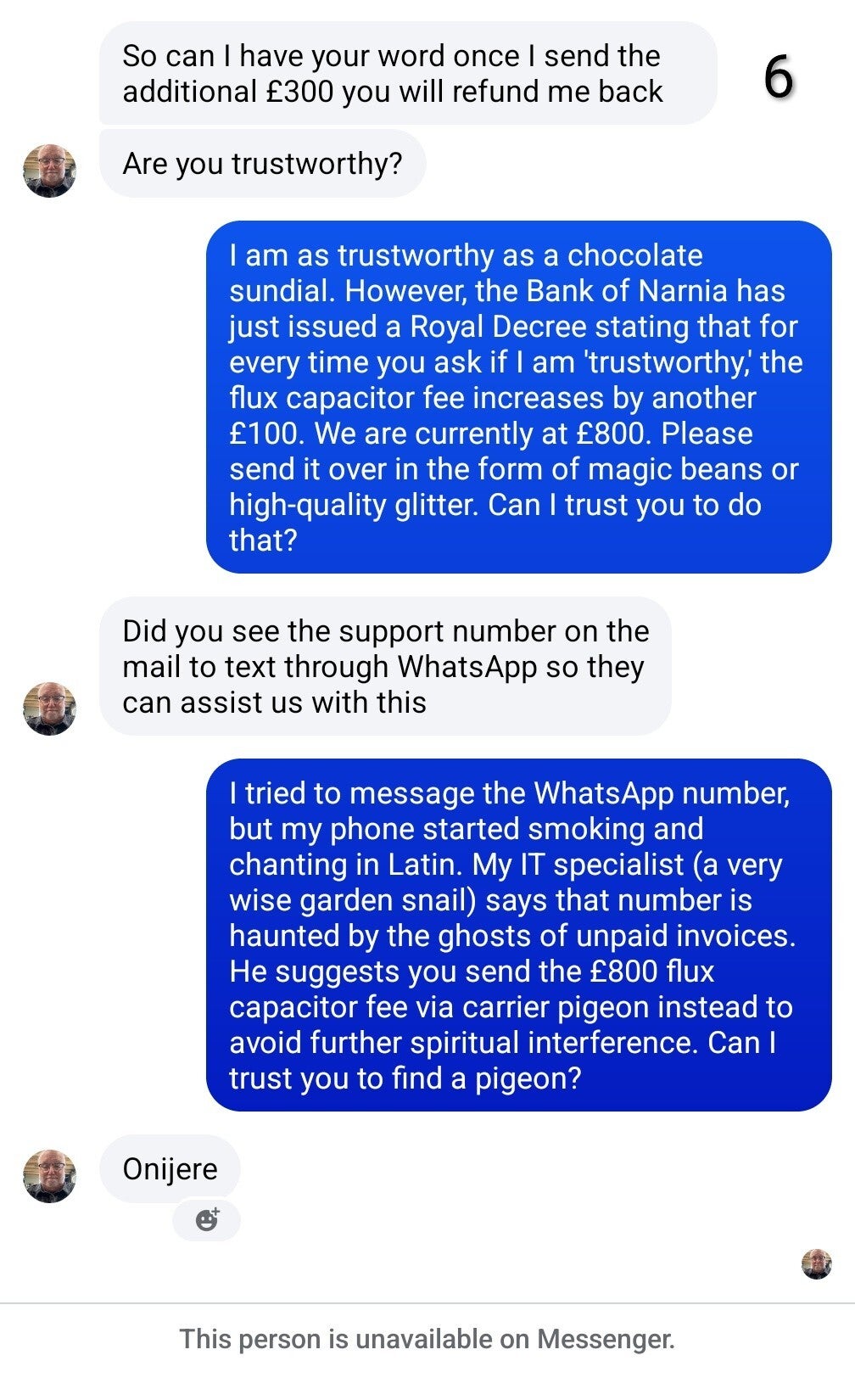
| Emotional manipulation | They ask if you're "trustworthy" to guilt you into sending money | I responded with satire: “I am as trustworthy as a chocolate sundial…” |
📸 Screenshots & Spoofed Emails
To help others recognize these tactics, I’ve included screen captures of our entire conversation — from the initial inquiry to the surreal finale. You’ll also see a copy of the spoofed PayPal email they sent, claiming the payment was “on hold” and urging me to contact a fake support number.
These visual examples show just how convincing (and persistent) scammers can be — and how a little skepticism can go a long way.

🧠 How to Protect Yourself
Here are some practical tips to avoid falling for scams like this:
- Verify payments directly through your payment platform (e.g., log into PayPal, not just your email)
- Never send money to receive money — legitimate buyers don’t ask for deposits to unlock funds
- Watch for spoofed emails — check the sender address and look for typos or vague language
- Use secure payment methods — avoid accepting payments through unfamiliar links or third-party apps
- Trust your gut — if something feels off, it probably is
😂 Turning the Tables with Humor
Instead of engaging seriously, I leaned into the absurd. I invented a fictional “Bank of Narnia,” a “Premium Galactic” account level, and a flux capacitor fee payable in magic beans. The scammer kept trying — but eventually, they vanished.
Humor won. And I kept my money.
💬 Final Thoughts
Scammers prey on kindness, creativity, and trust. But with awareness and a dash of sass, you can protect yourself and even have a little fun along the way. Share your stories, warn others, and keep creating boldly.
Have you encountered a scam like this? Drop your tales below — let’s turn caution into community.
Add comment
Comments